
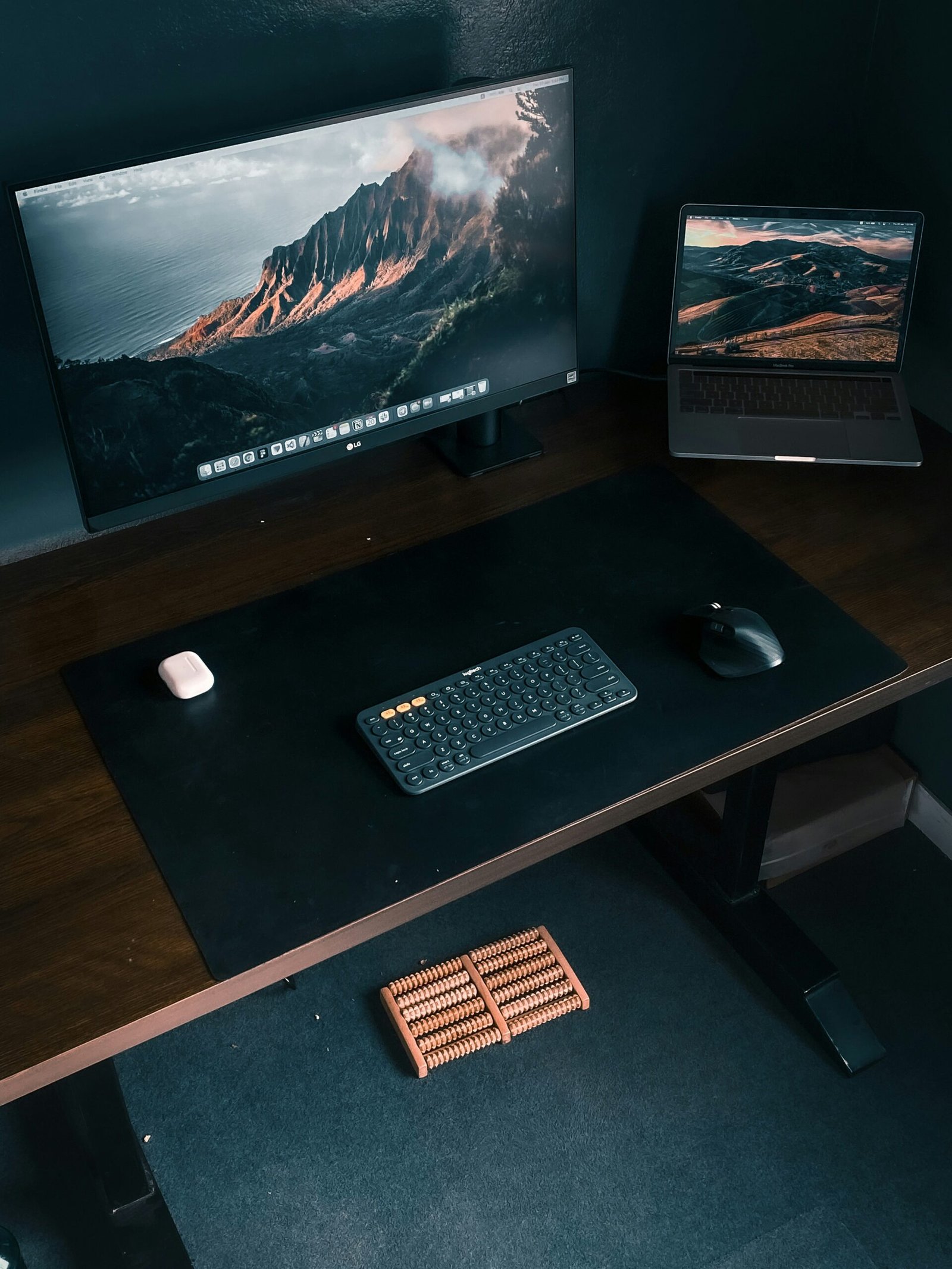
Do You Really Need a Footrest? (Ergonomic Expert Answer)
Do you need a footrest? Here is the short answer: if your feet do not rest flat on the floor when your chair is at the correct height for typing, yes — you absolutely do. It is not about luxury or preference. It is about maintaining the biomechanical chain from your feet through your hips to your spine.
Why the Question “Do You Need a Footrest?” Matters More Than You Think
Standard desks are 29 to 30 inches tall. For your forearms to be at the correct 90-degree typing angle on a standard desk, your chair seat needs to be about 17 to 19 inches off the ground. If you are shorter than about 5’7″, this often leaves your feet dangling or resting on tiptoes — and that is exactly when the answer to “do you need a footrest” becomes a definite yes.
This affects more people than you would expect. According to CDC anthropometric data, the average American woman is about 5’4″ and the average man is about 5’9″. That means roughly half the population is using desks that are slightly to significantly too tall for them.
What Happens When Your Feet Dangle
When your feet do not have solid support, the weight of your lower legs hangs from your thighs, compressing the underside of your thighs against the chair seat. This creates pressure on the blood vessels and nerves in the backs of your legs, reducing circulation and causing numbness, tingling, and discomfort.
Without foot support, your body also compensates by scooting forward in the chair to get your feet to the ground. This takes your back away from the chair’s lumbar support and puts you in a slumped, unsupported position — which is exactly how lower back pain starts.
A footrest eliminates both problems by giving your feet a solid platform at the right height, keeping your thighs parallel to the ground, and allowing you to sit all the way back in your chair with your back supported.
What to Look For If You Do Need a Footrest
Height adjustability is essential unless you already know the exact height you need. A range of about 3 to 6 inches covers most people. Some footrests offer a fixed height with a tilting surface, which works well if the height is right but does not adapt if your setup changes.
Surface texture matters for grip. Your feet should not slide off the footrest throughout the day. Look for a textured or rubberized surface.
Size should be large enough for both feet to rest comfortably side by side with a little room to shift. A platform at least 15 inches wide and 10 inches deep works for most people.
Rocking or tilting motion is a nice bonus. Footrests that allow a gentle rocking motion let you move your ankles throughout the day, promoting circulation and reducing stiffness.
Top Footrest Picks
ErgoFoam Adjustable Foot Rest — around $30-35. The most popular footrest on Amazon for good reason. Dense foam, two height positions, and a washable velvet cover. Best for: most people who need a simple, effective footrest.
Humanscale FM300 — around $70-90. A premium tilting footrest with a smooth rocking motion from Humanscale. Height adjusts easily, platform is large and sturdy, made of recycled materials. Best for: people who want a footrest that encourages movement.
HUANUO Adjustable Foot Rest — around $20-30. Budget-friendly with an adjustable height range and a non-slip surface. Best for: testing whether a footrest helps before investing more.
When You Do NOT Need a Footrest
If your feet rest flat on the floor with your chair at the correct typing height and your thighs are parallel to the ground, you do not need a footrest — and adding one could actually cause problems. A footrest when you do not need one pushes your knees too high, which tilts your pelvis backward and flattens your lumbar curve. Do not add one just because it seems like a good ergonomic accessory.
Also, if you use a sit-stand desk and spend a significant portion of your day standing, a footrest only applies to your sitting time. Some people find it easier to just remove it from under the desk when they stand.
For help figuring out if your desk height is part of the problem, read What’s the Best Desk Height for Your Body? And for the complete workspace setup, check out our Ergonomic Home Office Setup Guide.